















BLOODMONEY: Requiem
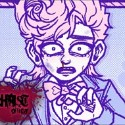
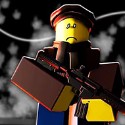


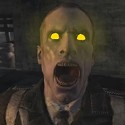
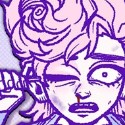



BLOODMONEY: Requiem looks like a candy-colored clicker about a smiling man at a roadside stall, but it plays like a slow test of how much cruelty you will accept to reach $25,000. Every click on Harvey Harvington in this game pays a dollar, and every shop upgrade pays more while leaving a visible mark on his face.
| Genre | Horror clicker with visual novel storytelling |
|---|---|
| Platform | PC |
| Core mechanic | Click Harvey for cash, then decide which tools to buy |
| Key characters or items | Harvey Harvington, Eun-mi, Feather, Needle, Hammer, Scissors, Match, Knife, Gun |
| Primary zone or setting | Harvey's booth on the side of the road |
| Number of modes or levels | 2 campaigns (original booth story and Requiem route), 3 booth endings |
Harvey's Booth and the $25,000 Problem in BLOODMONEY: Requiem
You need $25,000 for an operation, you pass a stall on the side of the road, and Harvey offers a dollar for every click. That is the whole pitch of the game, and it works because it never pretends the money is clean.
Early in the game Harvey is chatty and warm, and clicking with your bare hands feels harmless. Once the shop opens around your first $100, the loop changes. Each tool pays roughly double the one before it, and each one costs Harvey something you can see. Buying anything at all is a choice inside the game, and the story reads your choices back to you.
Idle-game fans will recognize the rhythm at once: click, upgrade, click faster. Here that familiar loop is the source of the dread, because the efficient move and the kind move point in opposite directions. The cheerful pastel art never changes while Harvey's face does, and that gap is what players remember afterward.
The pacing is short by design. A single run fits in one sitting, so the pressure in this game comes from repetition and not from sprawl. It wants you to sit inside that repetition until Harvey's cheerful greeting starts to sound uncomfortable.
Controls in BLOODMONEY: Requiem
On PC the whole game runs on the mouse, so the control scheme takes about ten seconds to learn. What it asks of you is judgment, not reflexes.
- Left mouse button on Harvey: earns money at your current per-click rate, and it is your only source of income.
- Left mouse button on the shop: opens the tool list and buys an upgrade. Treat every purchase as permanent, because the Scissors close off the Good Ending for that run.
- Left mouse button on dialogue prompts: advances text and picks answers, which matters most in the Requiem campaign when Harvey asks who you really are.
- Steady clicking pace: fast, even clicks suit the grind, but players warn against mashing during the Knife confrontation, which behaves like a quick-time prompt.
Guides written by players never mention key binds for this title, which says a lot about how much of the experience lives in the cursor. If you plan to play in long sessions, a comfortable mouse matters more than any setting in the game.
Two Campaigns Inside BLOODMONEY: Requiem
The Original Campaign
The first campaign rebuilds the booth story: earn $25,000 and decide how Harvey ends up. Reach the goal without buying the Scissors and you get the Good Ending, where Harvey waves goodbye. Get there with the Scissors, Match and Knife and you earn the Normal Ending, which finishes in a courtroom. Buy the Gun for $20,000 and you unlock the Bad Ending, which many players call the True Ending.
The campaign is short but the goal is never only the money. You are choosing which of three endings you are willing to live with, and the game tracks every step of that choice through Harvey's appearance.
Because the three endings are independent, each one is a separate route through the same game. Nothing you do in one run carries into the next, so a Feather run and a Gun run are different stories with the same booth in the background.
The Requiem Campaign
The second route is where Harvey becomes self-aware. He remembers past injuries and deaths in the booth, talks to you directly, and an off-screen director's voice at the start sets up the idea that this is a rehearsed performance. When you buy the Scissors, Harvey catches them mid-air and asks who you really are.
Stay silent and keep clicking, and Harvey glitches until he surrenders and lets you shoot him. Answer him instead, and the conversation slowly leads to a phone call with his wife, Eun-mi. Lore hunters will want both branches, because the game treats them as different stories rather than a simple reskin.
The Tool Ladder in BLOODMONEY: Requiem, From Feather to Gun
- Hands and Feather: the harmless tier. At $2 per click the Feather needs about 12,500 clicks to reach $25,000 in the original campaign, which is long but clean.
- Needle and Hammer: painful tools that make Harvey bleed, bruise and lose a tooth, yet the Good Ending stays open. They are the compromise many first-timers pick.
- Scissors: the point of no return. They pay $16 per click and take an eye, and the Good Ending is gone.
- Match and Knife: the Match costs $6,000 and pays $32 per click, while the Knife costs $10,000 and pays $64.
- Gun: costs $20,000 and leads straight to the Bad Ending.
The most common beginner mistake is treating the Scissors as one more upgrade. By the time you reach them, your payout has doubled four times from bare hands, and the temptation to keep going is exactly what the game is built to exploit.
Some completionists also stall on the Feather path, decide it is too slow, and quit before seeing the Good Ending. A Feather run is patient work, and players who queue something to listen to while they click tend to finish it. One note from the Requiem side: players report that pushing a Feather-only clear can end up requiring a Hammer purchase, so plan around the Needle and Hammer instead of fighting it.
Doubling explains why the game feels so lopsided. Hands pay $1, the Feather $2, the Needle $4, the Hammer $8, the Scissors $16, the Match $32 and the Knife $64 per click, so every step up trims the grind sharply. A player who reaches $25,000 with the Knife needs only a few hundred clicks, which is why the game makes those last tools feel cheap in the worst way.
Sensitive players should know that the game does not soften its imagery as the tools escalate, and the Scissors scene is the first moment where the game stops feeling like a joke. If you are unsure, play the Feather path first and decide later whether it is a game you want to push further.
Second Runs and the Details Most Players Miss
The biggest thing most players miss is that a second playthrough changes how Harvey reacts. Once Harvey catches the Scissors, extra endings can open beyond the three classic ones, and the community is still mapping every branch of the game.
Speedrunners will find the clicking loop easy to optimize but the dialogue hard to skip through without losing the Requiem conversation. Pay attention to the small details, such as the eyepatch, the burn marks and the stitched cheek that carry over into the courtroom scene. They are not decoration; they record your route.
A practical habit is to keep one clean run per ending rather than trying to see everything at once. Players who plan the Good Ending first, then the Normal, then the Gun, understand what each choice costs before the game makes them pay it.
Voice lines also reward attention. Harvey's tone shifts as his condition worsens, and turning the sound down means missing half of what the game is telling you. Players who mute the audio often report that the Normal Ending feels flatter than it should, and the game depends on that voice work more than most clickers do.
What Players Argue About
The loudest argument is whether the game is genuinely moral or just manipulative. Some players feel that it nudges you toward cruelty and then punishes you for it, while others see that as the entire point of the design.
The forced Hammer purchase on some Feather paths bothers players who wanted a fully harmless run. The Knife scene also splits opinion, since some call the quick-time prompt tense and others call it an unfair fail state that ends a run without a proper ending.
There is also the debate about which ending is the True Ending. Some players call the Bad Ending true because of how it lands, and others argue the Requiem route makes the Good Ending the more meaningful result.
Finally, the game keeps a running argument with itself about blame. Harvey offers you the money, yet you are the one who keeps buying the tools, and some players find that the strongest idea in the whole game.
Quick Answers for Players Starting BLOODMONEY: Requiem
How do you get the Good Ending in BLOODMONEY: Requiem?
Reach $25,000 without ever buying the Scissors. Hands, the Feather, the Needle and the Hammer are all allowed, so you can mix them to speed things up. Avoid the Match, Knife and Gun completely.
What does Harvey do when he catches the Scissors?
In the Requiem campaign, Harvey catches the Scissors mid-air and asks who you really are. If you answer him, the conversation leads toward calling Eun-mi. If you stay silent and keep clicking, he glitches and surrenders.
Is the Knife scene an ending or a game over?
Players describe the Knife confrontation as a fail state rather than a story ending. If you lose the quick-time prompt, the run stops, so reload and either pass it or avoid buying the Knife until you are ready to face it.
By the end of a run of BLOODMONEY: Requiem, whether you clicked with the Feather or fired the Gun, you remember Harvey's smile at the booth and the phone call to Eun-mi that only some players ever reach.